
Bee, Wasp, and Hornet Stings
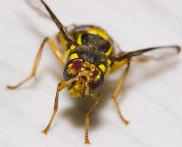 If a stinger is left embedded in the body, then remove it as soon as possible. This should be the first step. Use whatever tools are immediately available to dig it out. You could use a knife, credit card, pliers, tweezers, or a needle. Sterilize the tool if possible, but do not waste time. For maximum absorption, clean the area with soap and water before applying remedies, otherwise the oils on the skin will repel them.
Wasp and Hornet Stings
Vinegar - Wasp and hornet venom are powerful alkalines. Use an acid such as vinegar to neutralize them. It can be applied via a piece of cloth or bandaging. Make sure to keep the stings soaked for at least 15 minutes. Some vinegar will absorb through the skin, and it should greatly help eliminate the discomfort.
Bee and Yellow Jacket Stings
Baking Soda - In the case of bee stings, baking soda will help to neutralize the acidic venom. Make a paste by combining baking soda with water. Leave this paste on the sting site for at least 15 minutes. Some of the dissolved baking soda will leach through the skin to neutralize the venom somewhat. After applying it, and cleaning the sting area of residue; a chamomile tincture may be repeatedly applied for any residual itching or swelling.
Emergency Allergic Reactions
If there is difficulty breathing, extreme dizziness, or nausea after a sting, then there is a high probability that it triggered a dangerous allergic reaction. In these cases, we recommend quickly consuming a large (i.e. quadruple) dose of chamomile. Chamomile is related to ragweed, so those with ragweed allergies should skip this step. A large amount of echinacea is also strongly recommended, if available. If pulse irregularities are experienced, then try to take some taurine, even if that means just holding the powder in the mouth. Then immediately get to the nearest hospital. The allergic reaction may stop by the time you arrive at the hospital, but you should definitely make the trip in case it does not. In these unfortunate latter cases, a steroid injection may be required to save your life.
Misinformation About Sting Remedies
Treating most bee, wasp, and hornet stings is easy, but that may be difficult to believe if you have spent any time researching this topic on the Internet. Researching natural treatments for bee, hornet, and wasp stings is revealing about how much misinformation there is on the Internet. Some of it is laughable.
The Incredibly Stupid Sting "Treatments" That We Discourage
- Meat tenderizer
- Onion
- Potato
- Mud (literally dirt and water)
- Garlic
- Ammonia
- Vinegar combined with baking soda (neutralize themselves)
Related Articles
Naturally Treating Brown Recluse Spider Bites
Quick Tip: Potent Homemade Eye Drops For Dryness, Irritation, Itching, and Various Infections
Quick Tip: Emergency Alternative Medicine For Snake Bites