
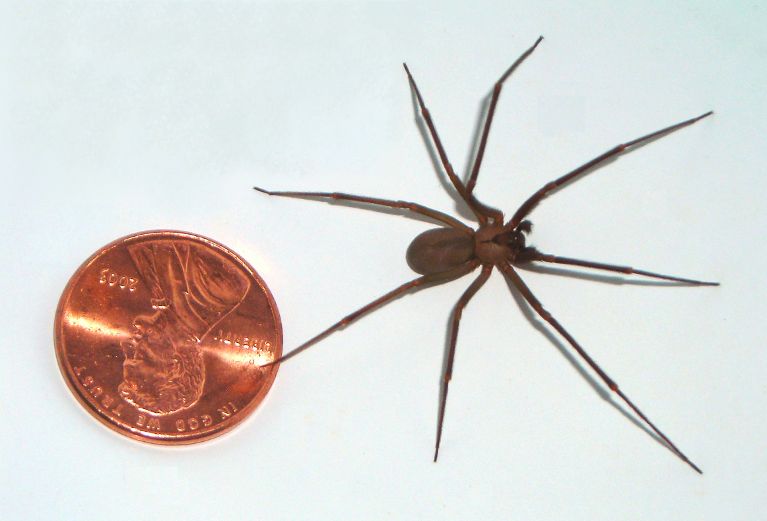
 Brown recluse spiders migrate into homes in the autumn, where warmer climates may be found. These spiders reside in places with regular human movement, but they are not usually aggressive. They are known to bite when they feel threatened or trapped. Bites often occur when a spider is trapped between a piece of clothing and the human body. It is believed that they enjoy human dwellings because their nocturnal lifestyle benefits from artificial light.
Brown recluse venom contains at least 9 distinct poisons; making it similar to rattlesnake venom. It effects blood vessels in the bite area to potentially cause massive tissue destruction. The result can be horrific. A bite that is left untreated may require an amputation of the limb, and it can lead to death. The bites cause kidney failure in some people.
Avoiding Brown Recluse Bites
Since bites often occur whilst people are sleeping, it is not always possible to avoid them. We recommend that bedding be fully checked before going to sleep, and that clothing be violently shaken before it is worn. These little devils love the insides of shoes, so beat your shoes together, and inspect the insides of them before wearing them. Keep all dresser drawers tightly closed, because they will hide in the underwear too. We normally recommend against the use of chemicals (especially poisons), but it is wise to spray a long-lasting insecticide around windows and doors in the autumn. Please take all precautions, including wearing splash-resistant goggles, and a respirator, if you do.
How To Know If You Have Been Bitten
A brown recluse victim is not always aware that he has been bitten; at least not immediately, when treatments would be the most beneficial. Sometimes the bites immediately cause extreme pain, but in other cases, there is no sensation at all. There may be visible fang pits at the bite site, but this is not always true either. Sometimes there is itching at the bite site, or a generalized fever. The general rule is that there are no general rules for brown recluse spider bites in the early stage. Some victims do not realize that they have been bitten until several days have passed.
Between one and three days after being bitten, an untreated brown recluse spider bite is likely to form one or more blisters. The bite site may become bluish colored at this time, and it may begin forming a crater.
Seeking Emergency Medical Care
A brown recluse spider bite could easily be considered an emergency condition, so a hospital visit may be essential to ensure that the victim is stabilized. Be forewarned that there is very little that orthodox medicine can do to stop the regional damage that is caused by a bite. Doctors typically give antibiotics and anti-histamines in the hope that regionalized damage can be somewhat minimized. These are truly desperate measures that yield very little success. Therefore, we recommend that you follow our alternative treatment recommendations.
Self Treatment - Stage 1
If you have been bitten by this spider (or any other spider), the first thing that you should do is apply activated charcoal directly to the wound. This is something that should always be kept in the medicine cabinet for poison emergencies. You can find it inside capsules sold at health food stores, or you can buy it in the aquarium department of a grocery store. Either way, the charcoal must be finely ground before it is used. Apply a thick paste to the bite area that is made from the fine charcoal powder and water. Tape the charcoal and water mixture to the bite, and leave for four hours. Using it again, or for longer periods is unlikely to help.
We also recommend orally consuming a teaspoon of dampened charcoal powder, in order to get a tiny amount of charcoal into the blood. Please read the article about activated charcoal usage, or proceed at your own risk. It is best to have it made ahead of time in preparation for any poison emergency, and the sooner that it is used, the better.
Take massive amounts of echinacea supplements until the bite wound completely disappears. Echinacea was used by the American Indians to heal snake bites, which is believed to be where the term "snake oil" originated. Some reports indicate that echinacea is very effective for treating venomous spider bites.
Self Treatment - Stage 2
 Six days after a brown recluse bite. Click to enlarge.
After the first few hours, charcoal will no longer be useful. Purchase bentonite clay powder from a health food store, and mix it with enough water to form a paste. Apply this paste onto the wound, and cover it with medical tape. Use colloidal silver instead of water if it is available. This paste should be left on the skin for at least two hours, several times a day. The skin should be washed before the clay is applied to remove any oils. A mild hand soap should be adequate. Avoid moisturizing soaps and lotions.
Topical bentonite clay has yielded some amazing results for victims of brown recluse bites. Internal use of bentonite clay is not advised. For best results, mix a small amount of echinacea with the bentonite clay powder. The clay will typically remain useful for about a week, but every bite will be different. Continue for a couple of weeks.
Brown recluse spider bites usually take 6-8 weeks to heal, but this treatment method should speed the process dramatically, and reduce suffering in the meantime. Hopefully it will help victims eliminate, or at least reduce the crater scars that these spiders have become infamous for causing.
Be Prepared
You may not be able to get bentonite clay from local retailers, so every family that has a possibility of being bitten by brown recluse spiders should purchase it as soon as possible, and keep it ready in storage. Once bitten, a person may not be able to obtain it from online sources in time to be useful. Seriously, order it now, along with the activated carbon.
Related Articles
Quick Tip: Potent Homemade Eye Drops For Dryness, Irritation, Itching, and Various Infections